
When sales slow down, the first instinct is usually to get more inquiries. Spend more on ads, boost a few posts, try a new directory. Sometimes that’s the right call. But in many small businesses, the inquiries are already coming in. You Don’t Have a Lead Problem, You Have a Follow-Up Problem
When sales slow down, the first instinct is usually to get more enquiries. Spend more on ads, boost a few posts, try a new directory. Sometimes that’s the right call. But in many small businesses, the enquiries are already coming in. They just aren’t all turning into work.
A phone message that doesn’t get returned until Thursday. A quote that goes out and nobody follows up. An email enquiry that sits in the inbox while everyone gets on with the day. None of these feel like lost sales at the time. They just quietly go nowhere.
The cheapest growth is already in your inbox
Every enquiry you receive has already cost you something, whether that’s advertising, your time or the goodwill that led to a referral. Converting more of those enquiries is almost always cheaper than buying new ones.
Here’s an example with made-up figures. A business receives 40 enquiries a month and turns 10 of them into customers, a conversion rate of 25%. If it lifts that to 30%, it wins 12 customers from the same 40 enquiries. That’s two extra customers a month without spending another dollar on marketing, and small improvements like this compound over a year.
What a decent follow-up rhythm looks like
Good follow-up isn’t pushy. It’s reliable. The customer asked for help, and following up is part of giving it to them.
A sensible starting rhythm for most service businesses looks like this:
- Acknowledge every enquiry the same day, even if it’s just to confirm you’ve received it and when you’ll be back in touch.
- Send quotes or proposals when you said you would.
- Follow up a few days after the quote to check it made sense and answer any questions.
- Follow up again about a week later if you haven’t heard back.
- Make a final contact after a couple of weeks. After that, keep them on your list for future contact rather than chasing further.
Businesses often win jobs on the second or third follow-up, simply because the customer got busy. The business that checks in politely is often the one that gets the work.
Speed matters more than most owners think
When someone enquires, they’re often contacting more than one business. The first to respond helpfully has an advantage, because the customer’s need is fresh and they haven’t yet formed a relationship with anyone else. A slow reply can lose the job before you’ve had a chance to show what you can do.
You don’t have to answer within minutes. But a same-day response should be the standard, and it’s worth checking honestly how often you actually meet it.
Follow up while the interest is still there
A customer’s interest is highest when they first get in touch and again when your quote arrives. From there it cools. Other quotes come in, other priorities take over, and the job that felt urgent last week slips down the list.
That’s why the first follow-up after a quote matters most. A quick call or message within a few days, while it’s still fresh, gives them the chance to ask questions and go ahead while they still want to. Leave it a fortnight and you’re often starting the conversation again.
Make each follow-up useful. Answer a question, clarify an option or suggest a start date, so saying yes is easy.
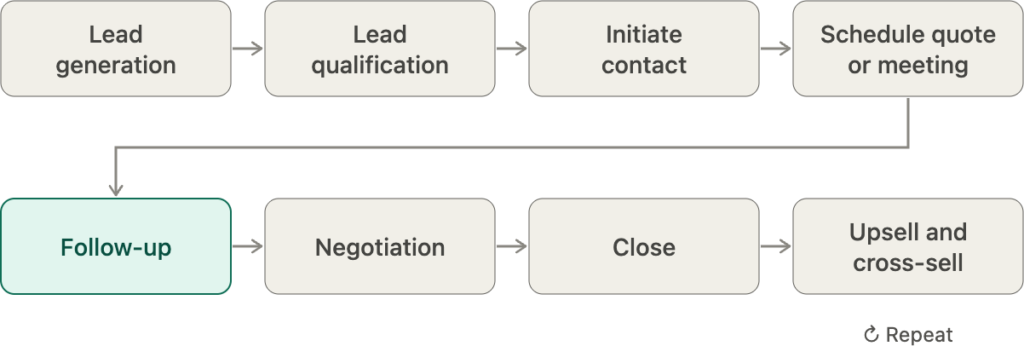
Follow-up is a stage in its own right. It sits between the quote and the close, and it often decides whether the sale goes ahead.
How to measure your conversion rate
At the end of each month, count how many enquiries came in and how many became paying customers. Divide customers by enquiries, and that’s your conversion rate. Track it every month so you can see whether it’s improving.
If you can, track where people drop out as well. Check how many enquiries got a response, how many received a quote and how many of those quotes turned into work. The stage with the biggest drop is usually where the problem is.
What a low rate usually points to
A poor conversion rate is useful information. It tends to point to one of a few things. You might be responding too slowly, or quotes might be going out without any follow-up. Your quotes might be unclear, or you may not be explaining the value of the work well enough. Or your marketing may be attracting enquiries from people who were never a good fit.
Each of these has a different fix, which is why measuring each stage matters. You can’t solve the problem until you know where it sits.
Find out where your extra revenue could come from
If you’d like to see how small improvements in areas like conversion can add up in your own business, our free workshop, Find $10K of Extra Revenue is a practical place to start. It runs for 60 minutes.


